Full System Scanner Explained: A UK Buyer's Guide
TL;DR: A full system scanner is a car diagnostic tool that reads far more than engine fault codes. It can access key modules such as ABS, airbag, transmission, TPMS and service systems, helping UK drivers and garages find faults faster, check MOT-related warning lights and avoid guesswork. Based on our testing, the most useful models combine full-system coverage, live data, service functions and dependable software support.
Key Takeaways
- A full system scanner reads far more than engine fault codes, covering key vehicle modules such as ABS, SRS, transmission, body control, TPMS and service systems.
- For UK drivers and workshops, a proper full system scanner can save time, reduce guesswork and help identify faults before booking costly garage work.
- The best option is not simply the cheapest scanner, but one that combines broad vehicle coverage, live data, service functions and reliable software support.
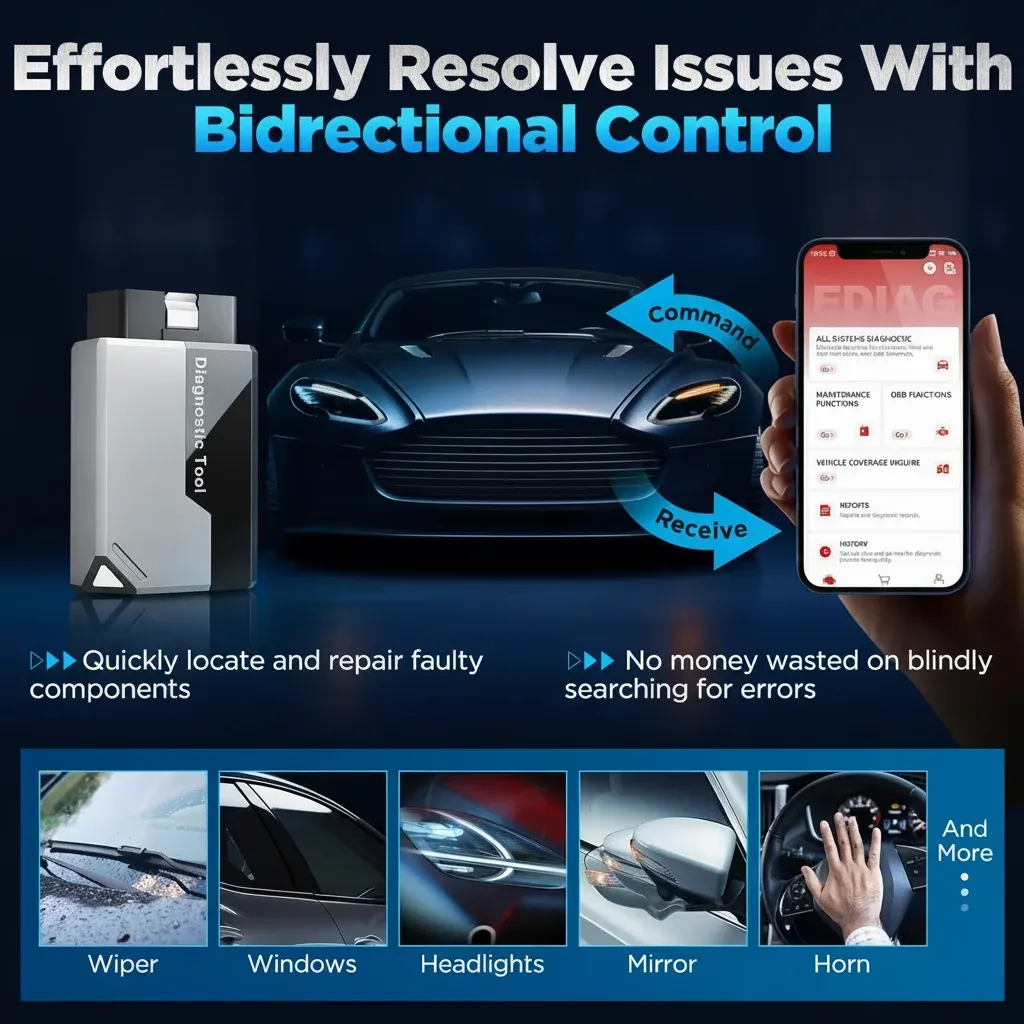
- A bidirectional function adds another layer of diagnostic capability by allowing active tests on supported vehicles.
- eDiag Elite is built around the needs of motorists and trade users who want workshop-grade diagnostics from a smartphone-based tool with no annual subscription fees.
A full system scanner is designed to read multiple electronic control units across a vehicle, not just the engine ECU. In practice, that means it can help you diagnose faults in systems such as ABS, airbags, transmission, battery management and service functions that a basic code reader often misses.
However, a warning light on the dash rarely tells the full story. Whether it is an intermittent ABS issue, an airbag warning after a battery change or a DPF-related fault affecting performance, modern vehicles spread information across multiple modules. Therefore, a full system scanner matters because it gives access to the systems that actually explain what is happening across the car.
For UK motorists, independent garages and mobile technicians, buying the right diagnostic tool can mean the difference between finding a fault quickly and wasting hours replacing the wrong part. eDiag Elite positions its solution clearly: Pro OBD2 Scanner: Your Bidirectional Scan Tool & Full System Scanner. As a result, users can turn a smartphone into a workshop-grade diagnostic tool without annual subscription fees.
This guide explains what a full system scanner does, who needs one, what features matter in the UK market and how to choose a model that offers genuine value rather than marketing hype. If you are still comparing broader diagnostic options, it is also worth reading The Ultimate Guide to Car Diagnostic Tool in the UK for a wider overview.
What is a full system scanner?
A full system scanner is an automotive diagnostic tool designed to communicate with multiple control modules across a vehicle rather than just the engine ECU. Basic OBD2 readers typically focus on emissions-related engine fault codes. By contrast, a full system scanner reaches deeper into the vehicle's electronic architecture.
Depending on make, model and software support, it may access systems such as:
- Engine management
- Automatic transmission
- ABS braking system
- SRS airbag system
- Body control module
- Tyre pressure monitoring system
- Battery management system
- Steering angle sensor modules
- Parking brake systems
- Climate control modules
- Immobiliser or gateway-related modules on supported vehicles
This wider access matters because many common faults do not trigger an engine management light at all. For example, an MOT-related issue may sit in ABS or airbag memory. Likewise, a stop-start problem may relate to battery registration. Meanwhile, a gearbox complaint may require transmission live data rather than generic OBD2 information.
If you want to understand where this sits within the wider diagnostic landscape, see our related guide on the UK market at Automotive Diagnostic Scanner Explained: A UK Buyer's Guide.
How is a full system scanner different from a basic code reader?
Can a basic code reader only read engine faults?
An entry-level code reader usually reads generic powertrain trouble codes beginning with P0 and clears the engine management light where appropriate. That may be enough for simple emissions faults or to check why an EML has appeared. Even so, it normally offers limited access beyond standard engine-related data.
Does a full system scanner read ABS, airbag and gearbox modules?
A full system scanner does much more. It can identify manufacturer-specific codes, access non-engine systems and show live data streams from individual modules. In other words, instead of only seeing that there is “a fault”, you begin to see where it sits and how it behaves in real time.
h3>The difference often shows up in real repair costsIf an airbag light appears after seat removal or low voltage during winter starting, a basic reader may tell you nothing useful. By comparison, a full system scanner can often read SRS faults directly and point to circuit issues or stored crash-related history on supported vehicles. Consequently, diagnosis becomes faster and there is less risk of replacing parts based on guesswork alone.
Ready to diagnose like a pro with eDiag Elite?
Upgrade Your Toolkit — £112.49